Featured

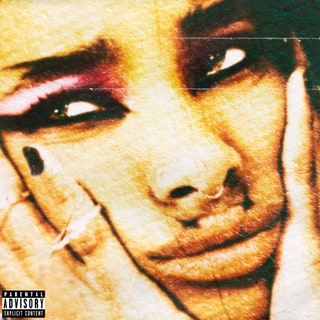
Review: ‘MONTERO’ by Lil Nas X

It’s rare these days to find an artist quite as talked about as Lil Nas X. At first, he was just the funny guy with the funny horse song. Then, he made news when he came out as gay, to the dismay of some and the joy of others. He then followed that up with a string of more and more gaudy music videos, culminating in MONTERO and INDUSTRY BABY, two of the singles for this very album. Not to even mention the satan shoe fiasco(which he ends up parodying). To say that they caused a stir online would be an understatement. All in under 2 years. Troll and comedian he may be though, Nas is a musician first, and he’s finally released his debut album, ‘MONTERO’, named after himself(as his real name is Montero Lamar Hill). His ‘7’ EP already proved he wasn’t a one hit wonder, so for me all ‘MONTERO’ needed to prove is that Lil Nas was still growing as an artist, and I think it more than does that.

His biggest strength has always been catchy, ear worm hooks, as evidenced by singles like Old Town Road, Panini and Holiday, and he keeps that up on this project. The stand outs chorus wise are obviously MONTERO and INDUSTRY BABY, but every song here has a really good chorus. Some of my other favourites are DEAD RIGHT NOW and SUN GOES DOWN, which happen to be very different in tone from the first two. While The former are grand, celebratory tracks, DRN and SGD are much softer, more introspective tracks, and probably the best examples of that tone on this project. 

DRN takes a much more relaxed approach to the typical “fuck the haters” song, opting for more subtly triumphant trumpets and more R&B style vocals that make it feel less like “I’m mad” and more like “i’m disappointed”. Lyrically, it discusses aspects of Nas’ life he hasn’t talked much about so far, like his poor relationship with his mother in lines like “My momma told me that she love me, don’t believe her”. He even features vocals from his father near the end of the track, contrasting how close they are when compared to Nas and his mother, who’s had a history of drug addiction and emotionally abusing her son.

SGD on the other hand, drops the triumph almost entirely, becoming by far the saddest track on the album. The chorus itself should tell you why:

“I wanna run away

Don’t wanna lie, I don’t want a life

Send me a gun and I’ll see the sun”

Suicide is always an emotional subject, so I always appreciate when artists are able to be that vulnerable. I find this track to be easily my favourite, mostly because it’s the one that connects with me the best. I was an anxious, lonely black kid too once. I can’t say I ever seriously considered self harm, but those feelings aren’t foreign to me. As someone who can get really caught up on my past, I also particularly appreciated the lines:

“I know that you want to cry

But there’s much more to life than dying

Over your past mistakes”

Cause I do need to hear that sometimes. This track is one I wish got more attention. Yes, Nas is the guy who makes skits of himself being pregnant and makes some of the gaudiest music videos around, but he’s also the scared, vulnerable kid represented on SGD. It really disappoints me that this dose of extreme emotion is perpetually under the radar because the more in your face videos make for better headlines. The personal aspect here does supersede the musical one for me, but the song isn’t anything to sniff at either. It has some of Nas’ best singing to date on it, and the backing guitar pokes in at just the right times to heighten the emotion of the track. 

Even besides these two tracks, this album sees Nas going into more emotional subject matter than any of his previous work, giving us a lot more to think about than ‘7’ did. However, it’s still not very deep. It’s still the typical rotation of love, success and past experiences. Nas seems to have more fun doing pop and making fun videos, and while I respect it, I do have a preference for more complex ideas in music. I doubt he’s ever going to go down the concept album route, but his creation of visualisers for every song on the album shows that he at least has a strong sense for imagery with his music. 

Back to the music, I can say that Nas manages to include more sonic variation than I honestly expected. DON’T WANT IT and INDUSTRY BABY are more on the pop rap side, while surprisingly we get a pop rock sound on tracks like THAT’S WHAT I WANT and LIFE AFTER SALEM. Then, the trap drums come out on SCOOP and DOLLA SIGN SLIME, the tracks which also have the biggest features in Doja Cat and Megan Thee Stallion respectively. Doja makes the already enjoyable SCOOP even better, while Megan is sadly not really remarkable in her feature. SCOOP also possibly gives us a glimpse into the future, with Nas having a few lines of genuinely aggressive rap delivery. It’s no Denzel Curry growl, but if he could develop that delivery more, I’d be very happy to possibly hear a metal or industrial Lil Nas X track. 

For a first full outing, ‘MONTERO’ ends up being exactly what it needed to be. If there was any doubt before, this album makes it clear that Nas is here to stay. Young as he is, he’s already got a strong vision for what type of music he makes and most importantly, what he enjoys making. Like many newer artists he isn’t afraid to jump around genres, and though I didn’t discuss it too much, he’s got a killer sense of humour. With that, I guess it’s time to start the clock till the next Lil Nas album. 

Score: 77%

Best song: SUN GOES DOWN

Best Feature:  Doja cat on SCOOP

Featured

Review: ‘Sometimes I Might Be Introvert’ by Little Simz

If you listen to British rap and you haven’t had Little Simz on your radar, take this as your signal to change that. Simz has been on my radar since she wowed me on the 2017 Gorillaz track, Garage Palace. Her 2017 album ‘Stillness in Wonderland’ then made for a good introduction to her as a solo artist. Two years later, her next release ‘Grey Area’ showed glimpses of her multi-instrumental skills, and now ‘Sometimes I Might Be Introvert’ is an epic realisation of her instrumental potential. 

The leading single and quasi-title track Introvert not only made a great marker for her return, but also serves as the perfect opener for the album. Like most of the album, the track uses the power of a full orchestra to create a complex, ever shifting instrumental that swells and fades to perfectly match the intensity and mood of Simz’ lyrics. Lyrics which cover introspective thoughts and social plights such as:

“I hate the thought of just being a burden

I hate that these conversations are surfaced

Simz the artist or Simbi the person?

To you I’m smiling, but really, I’m hurting”

Or:

“Mothers burying sons, young boys playing with guns”

It’s easily one of the best songs of the year, and sends a strong message that this album is not coming to pull any punches. A message more than proved by how deep Simz is willing to go with her introspection. On the 4th track, I Love You, I Hate You, she covers the difficult topic of her feelings towards her absent father. She asks herself questions like “Is you a sperm donor or a dad to me?”, while admitting that “I understand wantin’ and needin’ an escape”. Just like the contradictory statement in the title, she goes back and forth between resenting her father’s neglect, and also acknowledging his humanity and imperfections. This eventually culminates in the decision that “I’m not forgivin’ for you, man, I’m forgivin’ for me”, deciding to let her pain go in order to allow herself to heal. This unsure lamentation is supported not only by the same quality of instrumentation found on Introvert, but also by a constant refrain of “I love You, I hate You” that helps better sell her turbulent mind, and when she approaches the end of her verses, the combination of this refrain, her vocals and the building instrumental creates an almost chaotic layering that mirrors the tension and stress the topic brings to her. It’s another example of how the orchestra is her best friend on this project. 

Variation is the spice of life though, so orchestrated tracks aren’t all she has to offer. For example, one of the best 2 track stretches in the album is that of Point and Kill and Fear no Man. Both tap into Simz’ Nigerian roots to create infectious tracks that tickle my personal desire for Nigerian music that diverts from the popular Afrobeats sound. Point and Kill(named for a Nigerian saying that implies getting what you want) even features my current favourite Nigerian artist, Obongjayar. They’re both quite jazzy tracks, with the former focused more on the brass and bass side of jazz while the latter goes hard on that recognisable west African percussion, with added group chanting. There’s an instrument included in Fear no Man that I never learned the name of, but it’s what provides that shaker sound that feels really familiar to me. This track honestly makes me want to learn Djembe drumming again. 

Instead of the music video, I wanted to use this live performance to show how good her energy is on stage

Then on Rolling Stone, she dips more into Grime and Trap sounds for a more typical, celebratory rap track. Another highlight is Woman. On an album where Simz makes sure to emphasise pride for black women, Woman is the peak of that. It’s an entire track of nothing but love for women from Nigeria to Jamaica and Brooklyn. In her own words from an interview:

“I love it when I see women doing their thing and looking flawless; I’m here for that. It’s empowering, it’s inspiring; I wanted to say thank you and I wanted to celebrate them.”

And celebrate them she does. 

But obviously, no album is perfect. Great as the album is, it does have some duds. I See You is probably the biggest offender. In an album that stands out for it’s marriage of instrumental and vocals, this song sticks out not only for the relatively basic instrumental, but also for what sounds to me like some weird mixing. Simz’ voice comes out higher than the backing track, almost like it’s a live recording. It’s still a nice, relaxing track to mark the middle of the album, but it pales in comparison to the other tracks. I also personally don’t like the sheer amount of interludes. Those that tie directly into the tracks and don’t overstay their welcome like Little Q Pt. 1 are more than welcome, but some of them are as long as whole tracks, and while they add to the cinematic flare of the project, on repeated listens, they start to get in the way. We could’ve really done without Never Make Promises and The Garden, and would’ve had a more relistenable product for the sacrifice. The narration on most of the interludes by actress Emma Corrin does make them more poignant, but even her delightful articulate delivery can’t make me get over my distaste for long interludes. 

Taken as a whole, ‘Introvert’ is easily Simz’ best project to date and a hot contender for my AOTY. Taken track by track, it’s got some of the best production I’ve heard on a rap album(certainly on a British one), and provides a nice variation of sounds as the album goes, keeping you on your toes. If there was any doubt beforehand, this album proves that Little Simz is a name to be known and respected not only in the British rap scene, but the global one. 

Score: 87%

Best song: Introvert

Best Feature:  Obongjayar on Point and Kill

Featured

Review: ‘Black to the future’ by Sons of Kemet

Up until now, I’ve generally avoided reviewing albums that are mainly instrumental or in a language I don’t speak. As much as this is a music blog and I’ve been trying to improve my understanding of music, I’m still primarily a writer, and words help ground me. Even when lyrics aren’t too big of a part of a song’s appeal, having them there always helps me to divide tracks into sections in my head, making them easier to judge. Without lyrics, I have a tendency to lose myself in a song, and struggle to properly analyse its flow. Due to this, I haven’t wanted to put judgements on music I know I’m not fully able to grasp, lest I give them a bad representation. However, I feel like trying to grow past this weakness requires me to give it a try, even if I’m not fully satisfied with it. 

To summarise, take this review with a grain of salt, because instrumental albums aren’t my specialty. So without further ado, let’s get on with the review.

“Field Negus

Pick up your burning cross

Think of home

Hustle

For the culture

To never forget the source

In remembrance of those fallen

Let The circle be unbroken

Envision yourself levitating

Throughout the madness, stay strong,

Black”

The visual aesthetic of the album is also quite striking.

This is the poem that appears when you take all of the album’s track names together. It’s a poem about perseverance, remembrance, and pride. This corresponds with the general message/theme of the album itself, which Sons of Kemet themselves describe as “a sonic poem for the invocation of power, remembrance and healing”. The most blatant parts of this message come from the opening and ending tracks, where poet Joshua Idehen presents two emotionally potent spoken word pieces that help not only set up, but summarize the album. He has a very traditional spoken word style, but has a charismatic and emotional enough cadence to really sell the mood of his tracks. The opener Field Negus is strained and desperate, summarising the struggles and history of black people in the west, building to a raspy, exasperated call to ”burn it all”. The track acts as a kind of speedrun of the black experience and black revolutionary thought, leading into the frantic, infectious track Pick Up Your Burning Cross, which is just as active sonically as the action its title commands.

By the time the closing track Black comes, that rage has died out into exhaustion. Idehen begins the track with a curt “black is tired”, and ends the song and the album with a frustrated call of “you already have the world, just leave black be. Leave us alone!” To match this delirium, the instrumental is droning and repetitive, almost as if it lacks the energy to keep going as hard as it had done for the rest of the album. Even through this, it gets progressively louder and more cacophonous as Idehen’s frustration grows, almost drowning him out before peeling back to let his final line “Leave us alone” ring out amongst silence. 

Besides these two tracks and Pick Up Your Burning Cross, Hustle, and For The Culture, the remaining 6 tracks are all instrumental pieces. I generally prefer the tracks with vocals, especially Hustle and Burning Cross which help fill the start of the album with rebellious energy to match that of Field Negus. Looking at the instrumental tracks though, they’re more of a mixed bag for me. To Never Forget The Source for example, is a chill track which provides an ebb in the album’s underlying frustration, but is also quite mediocre. Then you have Let The Circle Be Unbroken which is more sonically enjoyable, but descends into a chaos of out of sync instruments by the end, in a moment of freestyle jazz that feels like it should be the good kind of chaotic (like you might get with Death Grips or Clipping), but even my unusual ears couldn’t stand it. On the positive side though is In Remembrance Of Those Fallen, which opts for a creeping, foreboding sax to contrast the fast paced, energetic sax on the first half of the album. Even when the sax playing gets more fast paced, the surrounding instrumental keeps the song feeling more forlorn than angry or frustrated. 

The 5 song stretch of pure instrumentals in the album’s second half threatens to blend together a bit, but the tracks do manage to be different enough from one another to have their own identities. This is the part of the album where my aforementioned review difficulties arise, so I can’t give it a detailed description, but I can say every song more or less fits with the mood their title implies, especially Envision Yourself Levitating, which is fittingly wavy and is easily the longest track on the album, giving you more than enough time to slowly get sucked into it.


In general, Sons of Kemet opt for a more African style of jazz (at least on this album). Think less Louis Armstrong and more Fela Kuti. As I mentioned in my review of Obongjayar’s ‘Which Way Is Forward’, this style of afro-jazz hits a soft spot for me, so even when some parts of the album don’t work out for me, the whole project does end up being greater than the sum of its parts. This is my first experience with Sons of Kemet, and if only for their use of a music style I love, I’m going to be delving into the rest of their discography and looking forward to what they release in the future.

Featured

Review- ‘Lately I Feel EVERYTHING’ by Willow

For the third year in a row, we have a new Willow Smith Album to check out. After the soulful vibes of her self titled ‘WILLOW’ and the punk rock energy of ‘THE ANXIETY’, she’s interestingly decided to go for a pop punk sound on her newest outing, ‘Lately I Feel EVERYTHING’. Specifically, she’s opted to take us back in time to the early 2000s era of pop punk popularised by the likes of Paramore, Blink 182 and other champions of teenage angst. 

The journey for this release started back in April when the lead single and opener for the album, transparent soul dropped, introducing us to Willow’s newest musical foray. From the angsty subject matter of fake friends and betrayal, to the on point percussion from Blink 182 drummer Travis Barker(who shows up a few other times on the album), this track took everyone back to the early 2000s. Willow also managed to add her own spiritual twist on the genre, first getting inspiration for the track’s concept of a “transparent soul” from a quote from a Hindu guru. Between this track and the sight of Pop Rock icon Avril Lavigne on the track list, I had big hopes that this could be an improvement on last year’s ‘THE ANXIETY’, which had an interesting sound, but failed to produce a memorable experience.

Must also say, the Lipstick visuals in this video are amazing

As it turns out, Willow’s come back in strength. It very much seems like the pop punk sound is a better fit for her. Where her last project suffered from an overuse of vocal processing on certain tracks that only served to dull the impact of her and Tyler’s voices, ‘L.I.F.E’(Lately I Feel Everything) finds strength in letting her vocals shine again like they did on ‘WILLOW’. A good example is my favourite track Lipstick, which combines the long, morose notes Willow is so good at with some of the best instrumentation on the album. There’s no Travis Barker on this one, but the guitar(that I believe comes from Willow herself) is the star here, not only maintaining a steady rhythm in the background, but tagging in and out with Willow on the verses before shifting to be on beat with her to create a unique, varying rhythm to the song. 

Another great vocal showing was on Come Home, a lonely, lamenting rock track that sees Willow and guest Ayla Tesler-Mabe pouring their hearts out to absent lovers. They’re both good guitarists, so i’m not sure which (if any) of them did the guitars for this one, but whoever it is makes a strong showing the entire song, but especially with the soft guitar solo at the back end of the track. On another improvement over her last project, the lyrics here have also seen an improvement. Willow and Ayla take different stances on the shared topic, as Willow focuses on her love’s power in her life:

“I can’t bear you gone

Oh, you’re my stars and sun

A force in the room, of course they’re confused, you’re stunning”

Meanwhile, Ayla adds a bit of anxiety, wondering:

“Am I someone by myself?

Or am I only someone

When I’m with someone else?”

This represents a trend in ‘L.I.F.E’ of stronger, better written, more nuanced lyrics than in ‘ANXIETY’, which is integral with the genre Willow is shooting for here. Pop Punk and even Rock always run the risk of being too melodramatic, but across the album she manages to keep it from ever getting like that. 

Strong as some of the tracks are, there are a few mediocre ones. The weakest 3, Don’t SAVE ME, XTRA and 4ever aren’t bad tracks, but just don’t really present a strong enough sound to impress too much. I originally was more impressed with XTRA, but upon further listens I found that the bit of hip-hop flare didn’t really work as well as it could, including Tierra Whack’s verse, that just felt a bit too fast paced and lyrically unremarkable. 

The last track of note is GROW, the anticipated Avril Lavigne feature. As someone who only tangentially engaged with Avril in her heyday, she sounds like she hasn’t lost a beat. Even Willow commented on how much ease with which Avril was able to write her verse. It’s the most positive track on the album, delightfully revelling in self determination, self love and support, which stands out amongst all the angst and grunge that came before it. This song is the most nostalgic on the album, and wouldn’t sound out of place as the intro of a Disney Channel show. Fittingly, it feels like almost a blessing and a boost for Willow from one of the biggest names of this genre. Sadly, It’s one of the shorter tracks, so Avril only gets about 4 unique lines to herself. I really wish she could’ve had more time, but I’m happy with what we got.  

A real meeting of the generations

While I still think ‘WILLOW’ is her best album, the youngest of the Smiths has definitely made a better showing than she had last year. The intense energies of Rock and Punk definitely feel like an environment she excels in, so it’s good to see her find her stride with this kind of sound. I still think she has some work to do with easing into this sound though. I’d personally prefer if she could find a great balance between punk and soul and carve out a wild niche for herself. If this is the direction she decides to stay with going forward however, I for one won’t be complaining. 

Score: 79%

Best song: Lipstick

Best Feature:  Ayla Tesler-Mabe on Come Home

Featured

The F.A.M Blog: Introduction

Hi, and thank you for taking a look at my new blog. The main focus of this blog is going to be music criticism. Album reviews, song reviews, Artist spotlights, listicles, previews, etc. However, there will be occasional posts discussing other forms of media. I’ve got a great interest in several creative fields, and sometimes i’m going to want to speak on them. I’m rather new to serious music criticism, so hopefully the entries here can help me change that, and maybe put people on to some good music. Look forward to posts roughly every week. Thanks you again for coming, and I hope you enjoy what I’ve got to offer.

Let’s talk about Mr. Morale

Kendrick’s being going through something. 1855 days. He doesn’t want to talk about it, but his partner Whitney is making him. Just before we hear him for the first time on the album, she asks him to “tell them” with steadily increasing urgency. So he tells us, by shooting off into the fast paced verses of United In Grief, a song in which he shares his initial struggles with wealth and fame, his paranoia, his grief, and an occasion on which he trauma bonded with “green eyes”, a model he had an affair with after one of his shows. The pace at which he confesses all of this, and the constantly shifting, percussion-heavy beat he does it over makes this feel like a big release. He’s been holding this in and finally, it’s being released. Faster than he can stop it. It’s an emotional dump so hurried that he can only take breaks after each utterance of “I grieve different”; a simple explanation for all the wrong decisions he’s made. 

It’s a fitting way to begin ‘Mr. Morale and The Big Steppers’, as this is fundamentally a therapy album. All the confessions on this first track are just the tip of the iceberg. Across the following hour, we hear about Kendrick’s various regrets, fears and traumas. We hear about Kendrick’s inheritance of toxic masculinity from his father. We hear about his struggle with infidelity. We hear about the traumas of his family members and how they changed him. We also hear some slurs near the end, which you might not be a fan of. But ultimately, we experience one man’s attempt to express a lifetime of self reflection in an hour and 15 minutes of rap music. 

This album has a total of 18 tracks, across which Kendrick discusses topics that deserve entire essays all to themselves. Maybe one day I’ll have the time for that. For now though, I’m just going to do my best to summarise an hour of music in about 1500 words. And I’ve already used up about 400 so I’d better get started.

Some people tend to expect concept albums (and Kendrick albums in general) to be lyrically dense and musically limited. I’ve definitely spoken to people who don’t think you can vibe or get hype to a Kendrick track. As someone who seeks out music that paints a rich mental image, the pounding, barely changing beat on Worldwide Steppers is something I can 100% listen to casually. For those looking for something more traditional though, N95 offers a more function-friendly feeling, filled with trap drums, heavy bass and plenty of vocal ad libs. It even features the infinitely quotable chorus “Eugh, you ugly as fuck(you outta pocket)”. It’s kind of a break from the introspection on the album, as it addresses more of what’s going on in the outside world rather than Kendrick’s inner one. As the title might imply, it does make mention of Covid and masks, but uses the latter as a metaphor for the fake traits that people adopt in order to chase clout. The aforementioned chorus serves as a statement on the ugly nature people hide behind these masks. 

Another deeply interesting music video from Kendrick.

Admittedly though, there is no Maad City or DNA equivalent on this album. At least to me. Tracks like Mr. Morale, Silent Hill, and Savior are definite head bangers, but the track list as a whole is definitely more understated this time around due to the subject matter. We Cry Together feels like it was ripped straight from a radio drama, and while the instrumental is enjoyable, you can’t exactly put a moshable beat under a domestic argument. 

I’ve actually heard the album itself be described as a stage play, and I think I would agree. It’s very subdued, and has a noticeable story arc with some big character moments. The occasional pieces of narration/voice overs delivered by Kendrick’s partner Whitney Alford, psychologist Eckhart Tolle, and singer Sam Dew do call back to types of narrative voiceover used in theatre productions. The two interludes from Kodak Black and Baby Keem are also stage-worthy, being dramatic monologues that are used to break up the other more traditional tracks. Along the arc of this story though, I’m a way bigger fan of the latter half. A decent portion of the first half are more general commentary tracks. N95 as I mentioned, addresses fakeness and posturing. Rich Spirit is more concerned with wealth and not letting it change you. Worldwide Steppers has an interesting angle, framing everyone in society as guilty of causing some form of suffering, critiquing those who judge others harshly. 

The second half though, is when the therapy session really hits its fever pitch. The final 6 tracks especially, are just back to back emotional heavy hitters. Baby Keem’s Savior – interlude is 2 and a half minutes of Keem describing his dysfunctional upbringing and the negative behaviour it instilled in him. For me, it has some of the most striking lines on the album like “you ever seen your mama strung out while you study division?” and “my uncle would tell me the shit in the movies could only be magic. This year I did 43 shows and took it all home to buy him a casket”. These lines do an amazing job of shocking you with Keem’s tragic experiences, and it’s easily one of my favourite tracks on the album. 

The following Savior somewhat plays off of this, reminding the listener that their favourite celebrity “is not your savior”. Kendrick asks that we think for ourselves and not look to public figures to give us the answers. Even if you had an experience like Keem or Kendrick growing up, he insists that you cannot rely on them to help you heal. Just as Kendrick is going out of his way to unpack his own traumas on this album, he asks that you do the same, because he won’t be here to help. This sentiment will later be echoed in the final track, Mirror, where he continuously states “I choose me, I’m sorry”, making sure we understand that he aims to prioritise his personal life and happiness over producing music for his fans. When you think about it, that does explain the generally less radio-friendly nature of this project. He made it to be personal, and doesn’t seem to be seeking commercial approval anymore. 

I will say though, I wish he had taken the heavy introspection further. While the album starts and ends strong, the middle starts to become somewhat messy narratively. I like how the extreme toxicity of We Cry Together leads into the more serious half of the album, as the will to change your behaviour often comes after extreme conflict. However, the actual last song of the first half is Purple Hearts, a fairly enjoyable yet basic love ballad with strangely strong religious leanings. It works as a follow up to We Cry Together which does end with Kendrick and his partner reconciling, but in the grander scheme of the album it messes with the musical flow.

I also think Ghostface Killah’s heavily religious verse in Purple Hearts is completely misplaced on this album. I understand that faith is part of healing for some people, but to me when it’s time to reconcile with your loved ones, religion adds a degree of separation that only weakens your introspection. The religious imagery is also not used nearly often enough to be an integral part of the album’s themes, though I recognise that’s a personal preference. And while Silent Hill is a good track, it has no place in the 2nd half of the album. Especially when it has Kodak Black on it. Kodak being on this album at all is controversial due to some of his past actions(including accusations of sexual violence), but Kendrick seems to use him to make a point about trauma responses and redemption. However, Kodak’s style of rapping is just sloppy and takes me out of the song completely. If he was going to get a verse I think it shouldn’t have been on a dedicated track. 

To end off, let’s cover the final 2 tracks, Mother I Sober and Mirror. The former could easily be the closer. It’s the longest track here, and is a direct, haunting recount of some of Kendrick’s deepest traumas, that links it back to the greater, shared traumas in the rap and African American communities. He is very blunt in calling other rappers out for acting out due to past sexual abuse, and I’m genuinely happy he was willing to be so upfront about that. The track even ends with continued rebukes of the trauma holding his community back, and a voice over of his daughter thanking him for breaking the generational curse and giving her a chance to grow up healthy. 

“So I set free myself from all the guilt that I thought I made

So I set free my mother all the hurt that she titled shame

So I set free my cousin, chaotic for my mother’s pain

I hope Hykeem made you proud ’cause you ain’t die in vain

So I set free the power of Whitney, may she heal us all

So I set free our children, may good karma keep them with God

So I set free the hearts filled with hatred, keep our bodies sacred

As I set free all you abusers, this is transformation”

Mirror however, earns its place as the closer. Ending on MOS would be powerful, but instead of leaving us with the weight of all that trauma, Kendrick chooses to close on a restrained, yet triumphant anthem that insists “I choose me, I’m sorry”, celebrating not only his success in healing himself, but his decision to put himself and his family first. It restates a lot of the issues the album covers, and funnily enough, is a perfect answer to the question of where Kendrick had been for the 5 years he was inactive: “I’m sorry I didn’t save the world my friend, I was too busy building mine again”.

In that spirit, I leave you with encouragement. Give this album a listen, experience this man’s journey, and when it’s over, find the strength to choose you. 

Score: Can’t put a number on mental health

Best Track: Mr. Morale

Best feature: Baby Keem on Savior-Interlude

2021 Song Highlight(midpoint)

In what’s becoming a tradition for me, I’ve decided to mark the midpoint of the year by highlighting 3 of my favourite songs from the first half of the year. These are in no particular order and aren’t necessarily the best songs, just 3 that I liked and wanted to feature. 

Pink Blood– Utada hikaru

Considering the popularity of their music in Japan, I’m surprised Utada Hikaru hasn’t been summoned for as many anime intros as Asian Kung-Fu Generation or other popular Japanese acts. Once in a while though, they’re pulled out to tug on my heartstrings. This one’s a bit of a personal pick, since Utada’s voice is already strongly associated with abject depression in my mind. I’m a big Kingdom Hearts fan, and Utada’s voice is attached very strongly to my feelings for that series, especially the sad ones. Suffice it to say, I’ve cried to Utada songs before, and I don’t cry often. Biases aside, Pink Blood is still a moving track with some of the best singing and production I’ve heard from Utada. Of course, the anime it’s attached to, To Your Eternity/Fumetsu no Anata e, is as beautiful and sad as the song itself, and provides a slight boost by tying the song to certain character moments and general events in my mind, which is an easy way to make me like a song more. Even flying solo though, Pink Blood is the type of song I’d be more than happy to cry or groove to. 

Cashmere– Tkay Maidza

Upon trying to select for this list, I realised that Tkay Maidza had made at least one of my “Best Tracks” lists every year since I started this blog. In 2019 it was Awake, and in 2020 it was Don’t Call Again. This year, it’s Cashmere. I’m not even sure how she keeps doing it, but Tkay continues to drop tracks like it’s train simulator, and there’s always at least 2-3 elite songs in there. Her newest EP, ‘Last Year Was Weird Vol.3’ doesn’t drop the ball, and Cashmere felt like easily the best track from it, especially because it fits my ideal summer vibes to a T. She cheats a little by using such a nice bassline, but as usual her full, absorbing production and slightly coarse vocals won me over and earned her yet another spot on one of these lists. At this point I might have to just admit I’m becoming a big fan. 

Montero– Lil Nas X

Okay, we all know this one, whether we want to or not. This is a song that got shared around the world earlier this year due to the…controversial content of the music video. Suffice to say, if your parents are religious they definitely won’t like this track(or at least the video). I’m a big fan though. Satan aside, the actual song here is(like all Lil Nas X’s best songs) really catchy. I put Panini on my mid-year list in 2019, and I’ve had a similar relationship with Montero as I had with that track. It’s infinitely relistenable, and no matter how many times I hear it, I want to hear it again. The latin flavour is unique for a rap song, and Nas continues to deliver smooth flows and well crafted lyrics. He’s really coming into his own as an artist, and I’m impressed that he’s managed to turn what could’ve been a one hit career into something tangible and consistently enjoyable. I wish nothing but the best for this young man. 

While I chose to discuss these 3, I also had a few honourable mentions, so i’m going to list them below as well as linking my 2021 playlist for anyone interested in what new releases i’ve had my ear on. 

Honourable Mentions:

Introvert– Little Simz

Get Sun– Hiatus Kaiyote

Jealous(Acoustic)- Mahalia ft Rico Nasty

Hustle– Sons Of Kemet ft Kojey Radical

Pride is the devil– J.Cole

Playlist:

Review: ‘Mood Valiant’ by Hiatus Kaiyote

Today is a good day. Today is the day I finally get to talk about one of the best bands you’re not listening to; Hiatus Kaiyote. Unless you are listening to them. If so, you know exactly why I’m so excited. This is a group that has not released any music since 2015. When their last project ‘Choose Your Weapon’ released, Obama was still president and Brexit hadn’t happened yet. It’s only been 6 years, but it’s felt like 10. This was one of the bands I picked up on my big music binge in 2018, and I’ve been chomping at the bit for more releases from them for 3 of those 6 years. Imagine my joy on March 13th, when Hiatus released this album’s lead single; Get Sun. It felt like something was finally right with the world. Two more amazing singles later, and we have a full album to digest. And digest I have.

The first thing I always mention about Hiatus is the vocal style of the lead singer, Nai Palm. I vividly remember my first listen of ‘Choose Your Weapon’ leaving me with the impression that she must be some kind of shaman. There’s something about her cadence and lyrics that makes her sound mystical. I wouldn’t be surprised to find her in the woods leading a meditation circle around a crackling campfire. There’s not a single track in their discography that isn’t elevated by her presence. Not to discount the rest of the group though. As a bass man myself, I’m consistently impressed by Paul Bender’s smooth basslines, and the final two members Perrin Moss and Simon Mavin round their sound out on drums and keys respectively. 

(From left to right): Paul Bender, Nai Palm, Simon Mavin and Perrin Moss

With ‘Mood Valiant’, we’re looking at around 4 years worth of saved up material. The band apparently put production on hold when Nai had a breast cancer scare, which thankfully she recovered from. They’ve definitely altered their sound somewhat in that time. Their other 2 albums ‘Choose Your Weapon’ and ‘Tawk Tomahawk’ felt like very spacey, consuming projects, but ‘Mood Valiant’ feels a bit heavier to me. I don’t have time for a full dissertation, but it just feels like there’s a bit more going on instrumentally in each track. The songs also feel a bit faster paced. Never enough to fully obfuscate that mystical feeling, but enough to stray away from it a bit. This is not to say that they’re worse or better. They’re just different.

A great example of this is the track Chivalry is not dead, which if i’m not mistaken is the heaviest sounding song the band’s ever made. Lyrically, it’s a clever discussion of sex via metaphors of animals with unusual mating rituals like Seahorses and Leapord Slugs. The chorus combines high notes from Nai and a heavy bass to feel almost like a rock track, which is a far cry from the band’s usual soul flavour. This is a bonus though, as the two previous albums could get a tad repetitive at times. ‘Mood Valiant’ is a lot more varied in the sounds it offers, and I think it’s better off for it. After a 6 year Hiatus(pun intended), it would be a shame if we just got more of the same. I personally much prefer to watch artists evolve their sound project by project, even if I don’t always like the result.  

I also have to say the visuals made for this track are delightfully bizarre.

Two other spots on here that show the best of this new sound are Get Sun and All the words we don’t say. Fittingly for their comeback track, Get Sun is a triumphantly groovy track, backed up by the amazing orchestrations of Brazilian producer Arthur Verocai. The track is more layered than an onion. From elevating violins to glittery pianos and jazzy trumpets, it’s like a cornucopia of instruments, yet never feels too busy. It knows just when to calm down the instrumental to let Nai’s voice hold the spotlight. It was the perfect song to usher in this era of Hiatus Kaiyote, and is easily one of the best songs they’ve ever released. Even the process of creating it brought tears out of the band, and led to the creation of several other tracks on the album. 

All the words we don’t say on the other hand, takes a much more sinister tone, comparable to their track Swamp Thing from ‘Choose Your Weapon’. The first full minute and a half of the song feels strange and at first directionless. Instruments and vocals pop in and out like a Scooby Doo door chase sequence, building up to the eventual drop that really gets the song going. The next section uses a pounding, bassy instrumental to serve as the background for Nai’s low, crawling vocals, another sound completely unique to this album. Then, there’s the chorus which finally brings us out of the basement to a guitar heavy section mixed to sound like a live performance. Or at least, that’s what it sounds like to me. It’s a hard track to pin down, but I think it ends up working quite well.

Incase anyone forgot the door sequences I referenced.

I will say, aesthetically speaking I was hoping their new album would have an animalistic album cover like their last 2 projects did. The ‘Mood Valiant’ cover is quite abstract, and it honestly doesn’t really do it for me. Also, as good as the tracks are, some of them feel like they run on for just a little too long. Even Get Sun could do with 30 seconds or so shaved off the end portions. A little bit of extra time isn’t a game breaker by any regards though. 

I’m very happy to say that even after all this time, Hiatus Kaiyote has not missed a beat. Not only that, they’ve managed to evolve their sound without losing what made them so unique. ‘Mood Valiant’ is exactly what I could’ve expected from them in 2021 and I’m very happy to have this album to comfort me in these stressful times.  

Review: ‘Be Right Back’ by Jorja Smith

I think most of us have music libraries that can be divided into circles. There’s the inner circle who you listen to every time they drop and you hype up to your friends. Then there’s the 2nd circle who you listen to a fair amount, but don’t really follow or pay attention to. Finally, the 3rd circle belongs to the artists who you’re aware of and like, but rarely ever give a detailed listen to. For me, Jorja Smith resides in that 3rd circle. I listened to her 2018 album ‘Lost and Found’, but I forgot about it the next day. I still have a few Jorja songs in my rotation, but never a solo one. It’s all features from other artists. So, going into this new project I was hoping she’d give me something to move her up to the 2nd circle. 

My issue with R&B as a whole has always been that without other genres mixing with it, R&B can often sound very repetitive to me. Different artists have their unique sounds, but within those sounds I struggle to find as much variation as I would like. This is part of what made ‘Lost and Found’ unmemorable to me. I don’t think ‘Be Right Back’ fully escapes this feeling, but it does at least do enough that I feel a genuine desire to go back to it. 

Jorja herself said this project isn’t really her “big new album”, so I adjusted my expectations accordingly. A lot of these songs are just ones she made casually as far back as 2019, but despite not being built to go together, they gel surprisingly well. The album manages to find a good spot between being repetitive/samey and having a consistent sound. 

The track that stands out the most to me is Bussdown, which despite what the title might make you think, isn’t a party track. It’s a soft R&B lick like the rest of the album, but the prominent bass and gentle, echoing guitar in the background appeal specifically to my tastes. It also helps that it’s the only track here that has a feature to add some variety to the vocals. I’m not familiar with her, but Shaybo offers a deeper, more confident voice to contrast Jorja’s smoother offerings.  

I’m also a fan of Burn and Addicted, both more due to the message behind the tracks. Burn isn’t the most detailed discussion of burnout and overworking ever, but in Jorja’s music style, it doesn’t need to be. I’m a word guy at the end of the day, but I can respect that sometimes you need to be hugged for a message to get across instead of it being explained to you. If there’s one thing Burn does, it’s hug you. The album’s opener Addicted on the other hand, addresses a more emotional issue of giving more than you’re getting in a relationship. At first the chorus “I’m the only thing you should need, you should be addicted to me” rubbed me as somewhat self centred, but reading Jorja’s commentary on the track, I’ve grown to understand that the sentiment behind it is a pure one. If you feel like you’re addicted to someone else, it is fair to feel hurt if they don’t return the intensity. If I can understand that Kendrick Lamar doesn’t actually want to harm anyone even though he raps about it, I can understand that Jorja Smith isn’t actually self centred. Music sometimes involves hyperbole, and that’s something I’ve personally had to remind myself. 

Ultimately, ‘BRB’ isn’t making me into a Jorja Smith fanboy. It’s a solid project, with a consistent sound and paints a very relaxing, consuming atmosphere for it’s short 25 minute runtime. However, it’s a good enough improvement over her last project that I can say I’ll be waiting for when she does drop that 2nd studio album. Maybe that will be what moves her up to the 2nd circle.

Score: 79

Best song: Bussdown

Best Feature: Shaybo on Bussdown

Review: ‘The Off-Season’ by J.Cole

It’s been 4 years, but J.Cole has finally decided to release another album. Not counting his appearances on the Dreamville projects that is. 2017’s KOD was my introduction to the count of conscious rap, so me and him don’t exactly go back that far. Obviously though, he’s J.Cole. He’s a big name in rap, and apart from an occasional PR disaster I would say I generally like him and enjoy his music. ‘The Off Season’ doesn’t really put me off him, but it doesn’t really make me a Cole stan either. 

The constant comparisons to Kendrick Lamar are for good reason. J.Cole is one of the best active rappers and releases consistently good features when he’s not masterminding his own projects. He’s even been running on a trend of releasing successful albums with no featured artists, as a marker of his personal quality and independence. This trend ends here. ‘Off Season’ sees him finally letting features into his studio, and thankfully none of them drop the ball. My.life for example, makes excellent use of Morray’s singing chops and manages to deliver a 21 Savage verse with at least a little more energy than he usually offers. Pride.is.the.devil, even uses Lil Baby of all people to deliver the best song on the album. 

The track is built around a solemn yet upbeat guitar sample(coincidentally also used on Amine’s track Can’t Decide), but i’d say the strongest part of it’s sound is Cole’s voice itself. He puts his vocal chords to work on the chorus, and I was impressed with just how good his singing has gotten. J.Cole’s singing has been hit or miss at times, but I genuinely feel like he’s become quite good at it. When he wails the word “terrified” at the start of the chorus, his intonation adds enough genuine emotion to the word that the rest of his chorus and verses feel very raw. His second verse even flows so smoothly into Lil Baby that you don’t realise where one’s vocals stops and the other’s begins. I’m interested to see how much more Cole can push his voice going forward, because he definitely enjoys singing and has been steadily improving.

And the singing doesn’t stop there. Whether it’s Cole again or Dreamville artists Bas and 6LACK, let.go.my.hand is another genuine, emotional track that together with pride, forms a strong heart at the center of the album. The album doesn’t reach the quality of these two tracks again, but having them here makes the whole thing a better listen as they stopped me from getting too comfortable with the sound and themes of the tracks before them. 

Of course, since this is a J.Cole album, there are plenty of quotables and words of wisdom to be found throughout. From comedic lines like “Could put a M right on your head, you Luigi brother now” on the opener 95.south to more socially critical lines like this one from applying.pressure:

“Verses hit hard, never pitched hard or played the streets

These niggas’ whips hard, behind closed doors, can’t pay the lease 

Ain’t nothin’ wrong with livin’ check to check ’cause most have to 

Instead of cappin’, why don’t you talk about being a broke rapper? 

That’s a perspective I respect because it’s real”

Corny as he may be at times, part of the reason I respect J.Cole is that he feels consistently compelled to criticise rap culture and all it’s strange and toxic habits. ‘KOD’ was an album entirely concerned with drug use, and even without a consistent theme here, he regularly delivers gems. Another impactful one from the.climb.back is Cole’s suggestion of a “homicide hotline”; a phone number people can call when they feel like killing others in order to receive counsel. His exchange with Noname last year showed he’s not the most politically conscious person around, but I have to at least give him props for coming up with a concept like a homicide hotline. Only God knows if the idea would actually work, but I have to commend him for the novelty of it at least.

I have a lot of good things to say about it, but I do think ‘Off Season’ lacks any kind of “wow factor”. It’s not really going to be a classic and probably won’t even be in my top 5 albums of the year, but it’s a solid, enjoyable album with visible improvements from one of Hip Hop’s best, and I never say no to good music. 

Score: 75

Best song: Pride.is.the.devil

Best Feature: Morray on my.life

Tyler The Creator’s music was bad

Nowadays, Tyler the Creator is known for things like his cloudy Pop/Hip-Hop production and his hipster-esque clothing line. As a lot of people my age know however, his career hasn’t always been blonde wigs and love songs. In fact, he was only recently unbanned from visiting the UK, after getting banned in 2015 due to problematic content in his music. Funny enough though, I’d never actually heard what music he was making to earn him such infamy. Until now that is. 

The two projects that sparked the bulk of Tyler-based controversy were 2009’s ‘Bastard’ and 2011’s ‘Goblin’. I wanted to check them both out, but after the experience of ‘Goblin’, I honestly didn’t have the patience to give ‘Bastard’ a try as well. I’ve heard Tyler and his old collective Odd Future get talked up a lot, but ‘Goblin’ at least, was not worth that hype. Eminem had similar controversies around him at a similar point in his career, but even when going back to his old stuff now, it had an air of effortlessness to it that made even his most vulgar content more enjoyable and charismatic. I was an Eminem fan younger than I should’ve been, so there is an air of nostalgia for me that isn’t present with Tyler, but even taking that into account the gap is enormous.

For reference I tried to find an old and lower quality Eminem track. It’s still better than most of ‘Goblin’.

Tyler’s music from this era feels distinctly sloppy. I don’t judge him for it because obviously he was a teenager early in his career, with more than enough angst to fill up a hundred therapy sessions. I wouldn’t expect an ‘IGOR’ or even a ‘Cherry Bomb’ out of him in that state. His trademark synthesisers were still present, but his production as a whole was muddier, blander and significantly more grating. Some tracks like Fish were genuinely painful to listen to. Not to mention, that a lot of them went on for 5+ minutes. In my experience, it takes an extremely good song to justify a 5 minute runtime. None of these songs were on that level, yet he shot for even 7 minutes at times. 

Then of course, there’s the lyrics that made him so controversial to begin with. Like I said, I was an Eminem fan at a very young age. The things he said about his mother were so bad they made me feel stupid for disliking my own mother at the time. In my time online I have seen and read some horrible, disgusting things. I’ve spent more time than I’d like to admit on online forums like 4Chan, so to me these lyrics were not shocking. Whether it was rape or murder or whatever Tyler thought was edgy that day, it didn’t really phase me, which made them feel more pathetic than anything. 

Transylvania is one of the tracks that I knew was supposed to be really bad ahead of time, and it was definitely one of the more vulgar tracks. Some choice excerpts from this one are:

“Goddamn I love bitches

Especially when they only suck dick and wash dishes

Cook and clean and grant my wishes

And make me and the Wolf Gang sandwiches”

“Cunt will be bleeding, but that’s not from the time signature of the month”

“I am from the (Golf Wang)

Nigga, this is (Golf Wang)

Fucking f****t (Golf Wang!)

Kill them bitches, (Golf Wang!)”

I’m sure these sounded really bad to conservative parents and good to their edgy children, but to me it’s just…trying way too hard. This is some Xbox live level stuff. It reeks of someone who just wanted to say the most offensive thing they could think of. The issue with that however, is that if offense is your only goal, your content comes high in quantity but low in quality. He explicitly rejects the “Horrorcore” label on the album, but I can say that in even the worst Horrorcore I’ve heard, at least the gore and abuse felt more natural than this. Even Frank Ocean, who I only knew for his soft R&B, is on here talking about raping people. And even funnier, is that these two men who are on ‘Goblin’ throwing around the word “f****t” like it was the 50s are now both openly/probably queer. I don’t like to ascribe to the stereotype that homophobic people are all secretly gay, but hindsight is 2020, and I hope Tyler had time to rearrange his wardrobe while he was in the closet. 

Do I think Tyler deserved to be vilified and banned from whole countries? Of course not. His music was very provocative, but it was spineless. I’d struggle to find a reason why he posed any serious threat to anyone. However, it is definitely fair enough that so many people took issue with him back in the day. It wasn’t just about his lyrics being offensive. He was just taking out his trauma and frustration on others for literally no reason. I’m sure even he knew that. But happily, the past is the past. Tyler is free to come and go as he pleases to the UK, and his music is actually good now. I still have an issue or two with aspects of his persona, but looking back on his older work has certainly helped me better appreciate his journey as an artist. Let us never forget though, that ‘Goblin’(if not ‘Bastard’ as well) was absolute garbage. And that’s ok. 

Design a site like this with WordPress.com
Get started